

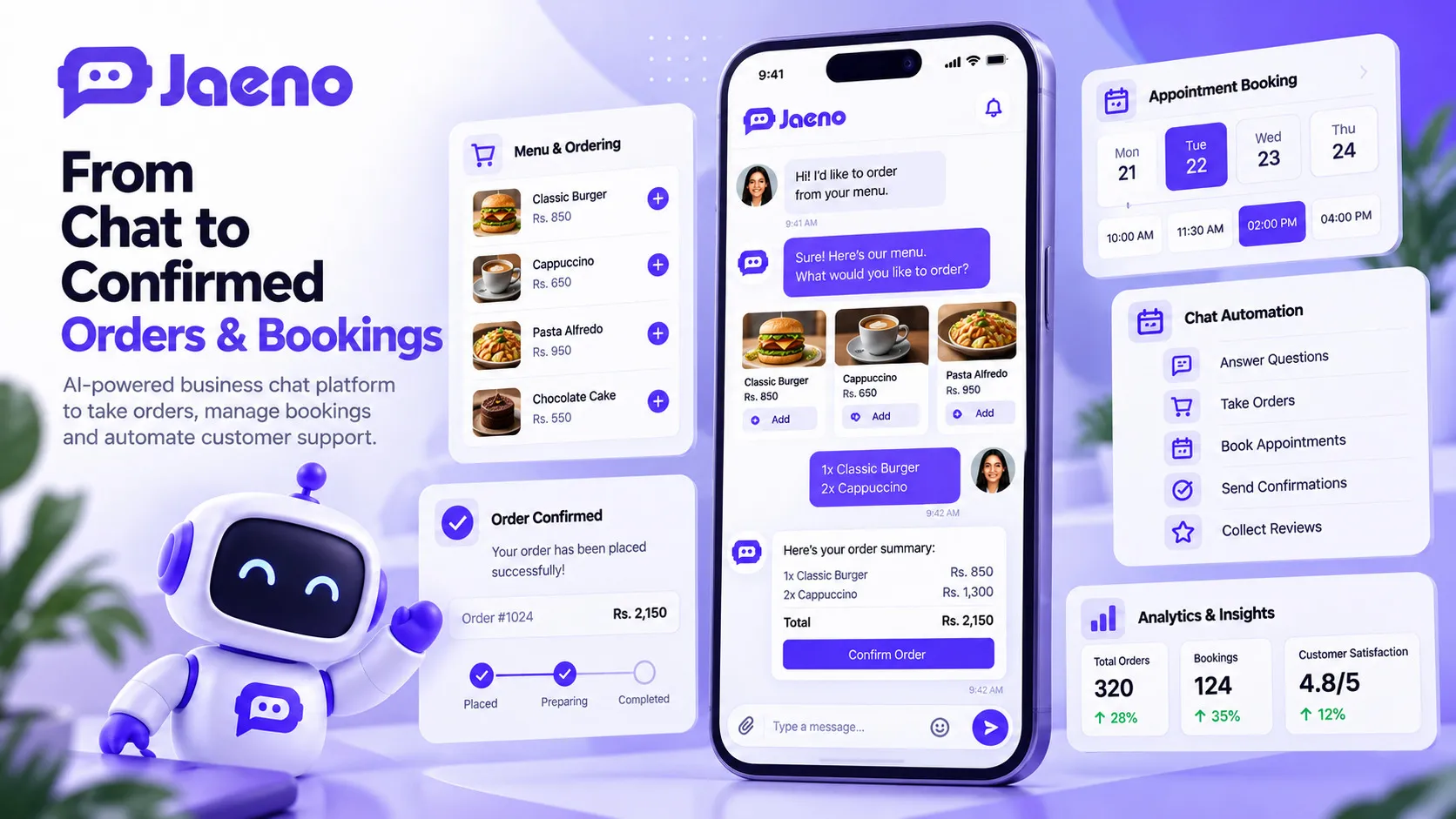
Business Chat Platform: Turning Customer Messages Into Results
A customer asks for an appointment. Another wants an order update. A third needs a product answer before making a purchase. When these requests arrive across disconnected channels, even good teams lose time. A business chat platform brings conversations into a more useful experience. Instead of treating every message as another ticket, companies can turn suitable requests into confirmed actions.
A business chat platform is software that helps an organization communicate with customers and manage requests through messaging. Advanced platforms can combine AI customer support, booking tools, order workflows, and conversation history. The best choice connects accurate replies to useful outcomes while providing human oversight, appropriate security, and a clear way to measure results.
Key Takeaways
- A useful chat solution should resolve requests, not simply reply quickly.
- Conversational AI works best with approved information and limited permissions.
- Finance and healthcare teams must assess privacy, compliance, and escalation before deployment.
- Start with one measurable workflow, then expand based on real customer outcomes.
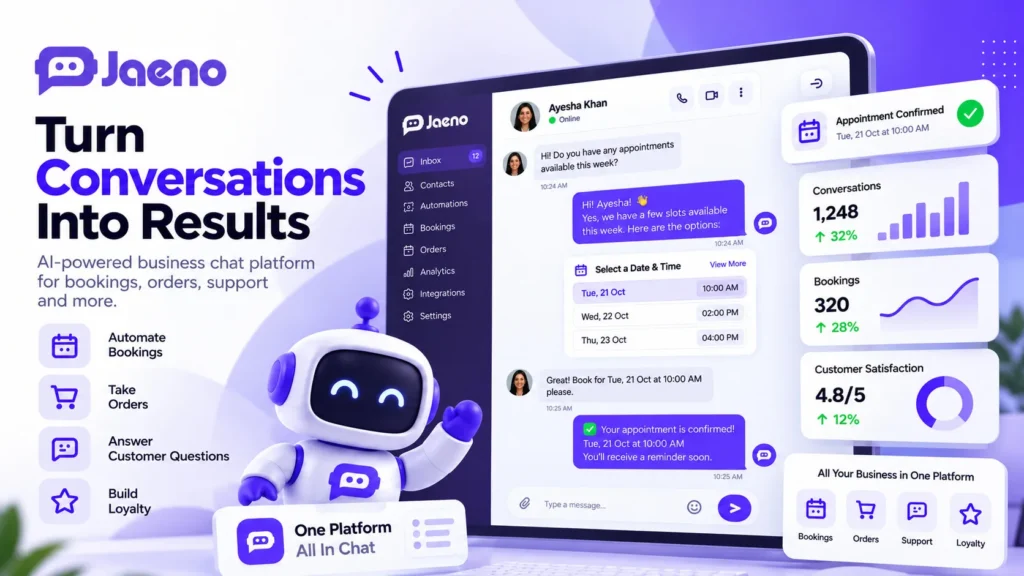
What Is a Business Chat Platform, and How Is It Different?
A business chat platform is a customer-facing communication system for answering questions, collecting information, and, when supported, completing tasks. It differs from internal collaboration tools such as Microsoft Teams or Slack, which primarily connect employees.
It also differs from a basic website chat widget. A more capable system can guide a customer through an appointment or purchase without making them restart elsewhere.
Consider three common categories:
- Live chat: Staff answer incoming messages, usually during operating hours.
- Rule-based chatbot: Prewritten paths handle predictable questions but struggle outside their scripts.
- AI-powered customer messaging: Software interprets natural language and may trigger approved actions through connected workflows.
No category is universally better. A specialist advisory firm might value a careful human conversation over automation. However, a service business handling hundreds of routine booking questions may benefit from structured self-service.
The key question is not, “Does it have AI?” It is, “Can customers finish what they came to do?”
How Does a Business Chat Platform Turn Messages Into Actions?
An effective business chat platform follows a simple sequence: understand the request, check reliable information, perform an authorized action, and confirm the result.
1. Accurate answers from approved information
A customer might ask whether a service is available tomorrow. The system should consult current operating hours or availability, not invent an answer. Therefore, businesses need an easy way to update prices, policies, menus, and schedules.
For that reason, unanswered or uncertain requests should move to staff rather than produce a convincing guess.
2. Bookings, orders, and confirmations in one thread
A practical conversational commerce journey keeps related steps together. For example, a customer selects a service, chooses an available slot, checks the details, and receives confirmation inside the conversation.
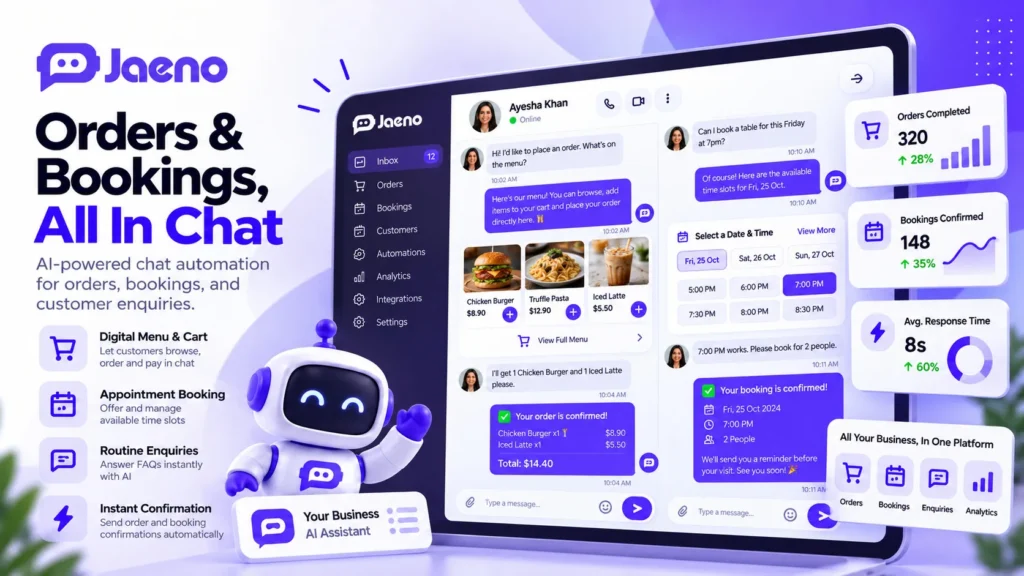
Jaeno focuses on this model. Its website describes AI-assisted replies, menu and cart ordering, appointment booking, loyalty rewards, and automated review requests. It also identifies in-chat payments as coming soon, not as an existing payment feature.
For a clinic, general appointment administration is a sensible starting point. For a restaurant, it may be menu selection. Those examples describe supported workflow types, not proof of integration with every industry system.
3. Human handoff and outcome tracking
Automation needs a boundary. Complaints, unusual requests, financial advice, and clinical decisions often require a qualified person. The system should make that transition clear and preserve necessary context where supported.
Measure completed bookings, confirmed orders, resolution rate, and correction requests. Response time alone cannot show whether someone received the right service.
Why Do Different Industries Need Different Chat Workflows?
A business chat platform becomes valuable when its workflow matches the risk and complexity of the business. The same design should not be deployed unchanged across a wealth manager, a hospital, and a manufacturer.
- Financial services, wealth management, and insurance: Use chat for office hours, meeting requests, document checklists, or routing policy enquiries. Avoid unapproved personalized financial recommendations. Confirm recordkeeping, identity verification, and applicable regulatory duties before handling sensitive client details.
- Enterprise SaaS and technology: Guide prospects to appropriate demos, explain approved product features, and route support questions. Integration with a CRM or help desk may matter more than flashy AI responses. Confirm those integrations with the vendor.
- Healthcare, biotech, and pharmaceuticals: Handle clinic hours, administrative bookings, or general service information. Clinical interpretation, medicine advice, and sensitive patient information require stricter controls. In the United States, HHS says applicable cloud providers handling electronic protected health information generally require a HIPAA-compliant business associate agreement.
- Supply chain, logistics, and manufacturing: Provide approved order-status instructions, pickup information, or distributor contact routes. Actual shipment updates depend on access to reliable logistics systems. Never promise real-time tracking without a verified integration.
These distinctions matter internationally. A business operating in Lahore, London, or Sydney may serve similar customer needs but face different data protection and sector rules. Consequently, procurement should consider the jurisdictions involved, not only the interface language.
How Should You Choose a Business Chat Platform?
Choosing a business chat platform starts with a workflow audit, not a product demonstration. In my experience as a content and automation strategist, a narrowly defined use case is easier to test than a promise to “automate customer service.”
- Map the customer journey. Collect 30 common enquiries and identify which ones end in a booking, order, answer, or handoff. Separate repetitive administration from decisions requiring specialist judgment.
- Test the end result. Ask vendors to demonstrate a full request, including changes and cancellations. A smooth greeting means little if confirmation fails.
- Review data controls. Ask who can access conversations, where data is stored, how long it is retained, and whether exports and deletion are supported. Verify encryption, logging, and incident procedures rather than assuming them.
- Check connections and ownership. Confirm the systems involved, required APIs, deployment effort, and who maintains the knowledge base. Never assume a CRM, calendar, or enterprise resource planning integration exists.
- Run a controlled pilot. Test 100 real or realistically simulated requests across normal cases, exceptions, and unclear language. Record completion, incorrect answers, handoffs, and customer friction.
- Compare total cost with value. Include setup, staff training, maintenance, and usage charges. A cheaper tool may cost more if staff repeatedly repair incomplete requests.
Here is a practical illustration, not a performance claim: if a team saves two minutes on each of 300 routine requests, it frees ten staff-hours weekly before exceptions and oversight. Validate any projected saving against your own pilot data.
For AI governance, the NIST AI Risk Management Framework organizes work around four functions: govern, map, measure, and manage. It provides a useful review structure even when a company is not legally required to follow it.
Conclusion: Better Conversations Should Finish the Job
The purpose of a business chat platform is not to make every response sound intelligent. It is to help people complete useful tasks with less friction. Start with one workflow, verify safety and integration requirements, and measure results honestly. If ordering or appointment booking is your priority, explore Jaeno and discuss which features fit your business before committing.
Frequently Asked Questions
Is a business chat platform the same as a chatbot?
No. A chatbot is one component that replies to users or guides questions. A business chat platform can also include customer history, human support, booking tools, and order workflows. Before purchasing, check which actions the product completes rather than assuming every chatbot can manage full transactions.
Can a business chat platform replace customer support staff?
A business chat platform can reduce repetitive administrative work, but full replacement is rarely a sensible initial goal. Customers still need human assistance for complaints, exceptions, regulated advice, and errors. A safer approach automates predictable requests while keeping staff responsible for decisions that need judgment or empathy.
Is AI business messaging safe for healthcare or finance?
It can support carefully selected administrative tasks, but suitability depends on the vendor, configuration, data, and local rules. Check privacy controls, access permissions, retention, audit needs, and required agreements. Do not place sensitive records or regulated advice into a system until those conditions have been verified.
What should small businesses prioritize first?
Start with the request customers repeat most: opening hours, bookings, menu questions, or order instructions. Choose a workflow with clear success criteria, then test it against real enquiries. A business chat platform that reliably completes one valuable task is more useful than one offering dozens of poorly maintained features.
How do you measure return on investment?
Track completed requests, staff time saved, failed responses, customer satisfaction, and total operating cost. Compare a defined pilot period with a baseline using similar demand. Include correction time and human oversight. High message volume alone does not prove that your business chat platform creates measurable business value.